Angela Bulloch
February 11 – May 11, 2026 | The National Art Center, Tokyo
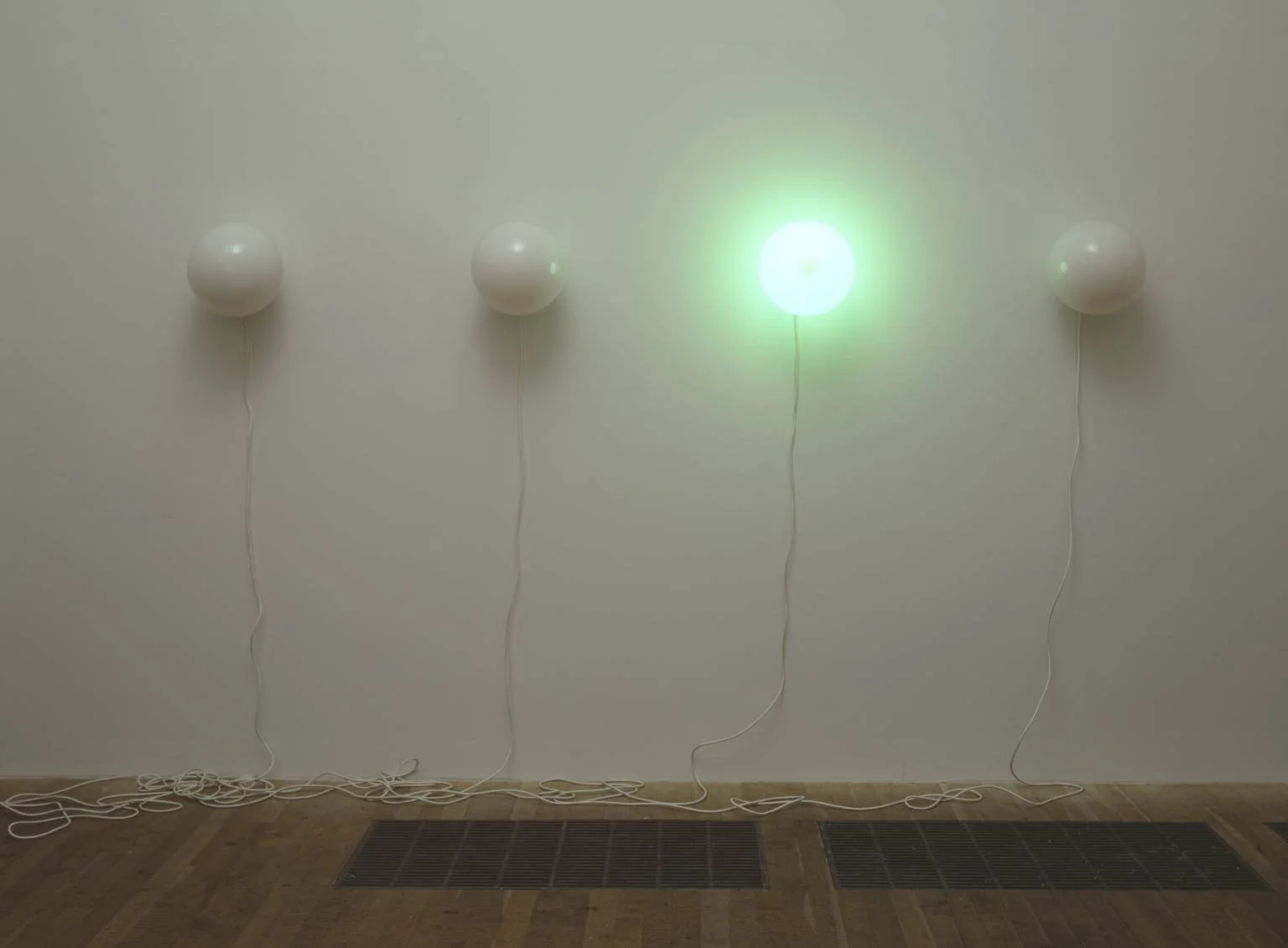
Angela Bulloch
West Ham - Sculpture for Football Songs, 1998
4 belisha beacons, 4 light bulbs and light control unit
166 x 300 cm
Collection of Tate, London
Angela Bulloch's 'West Ham – Sculpture for Football Songs' (1998) is featured in YBA&BEYOND: British Art in the 90s from the Tate Collection at The National Art Center in Tokyo.
This exhibition explores the dynamic evolution of British art from the late 1980s to the early 2000s. After going through the Thatcher era (1979-1990), a charged and uncertain social climate gave rise to a new generation of artists who challenged traditional norms and embraced bold, experimental practices. Many of the newer generation of artists who came to prominence in the 1990s were referred to in the art and popular media under the title Young British Artists (YBAs). Alongside other artists active at the time, these artists explored themes such as popular culture, personal identity, and shifting social structures.
'West Ham – Sculpture for Football Songs' is one of many works by Bulloch that are activated or altered in some way by the presence of gallery visitors.
Bulloch has made a number of works using Belisha beacons, which are more commonly used to illuminate pedestrian crossings. Here they are linked to a microphone in the gallery space and respond to sound, which initiates a sequence of flashing lights. The colors of the lights reflect the colors of the West Ham football strip, and the work’s title suggests that football anthems are a particularly appropriate trigger to speed up the light display. The unpredictable interactive element of this work is typical of Bulloch’s practice.
In 1997, Bulloch stated that she is interested in acknowledging the viewer’s role as an active participant in co-producing her works, saying that in her practice "the viewer is a collaborator in the sense that she defines, perceives the meaning in her own terms. This would happen anyway with any work, provided there is a viewer. What I try to do is make the fact of interpretation, understanding or perceiving part of purpose of the work itself."
(Angela Bulloch in Bussel 1997, p. 31)