
The 25 Sculptures That Define the Modern Age
Four artists and a curator debate the most important works since the end of World War II.
To choose the 25 most important works of sculpture made since 1945, we asked a panel of experts to gather at the New York Times building in March. They included the artists Firelei Báez, 45; Charles Gaines, 82; Adam Pendleton, 42; and Arlene Shechet, 77 — each of whom has, to varying degrees, explored and advanced sculpture in their work — along with Ruba Katrib, 44, the chief curator of MoMA PS1 in Queens and the former curator of the nearby SculptureCenter, the only museum in New York explicitly dedicated to the medium. Any task that ends in anointing something “the most important” is highly subjective and should be considered with a heavy dose of skepticism; a different group would have come up with different selections, and it’s easy to imagine the following list turning out differently had this same group met at a different time on the same day.
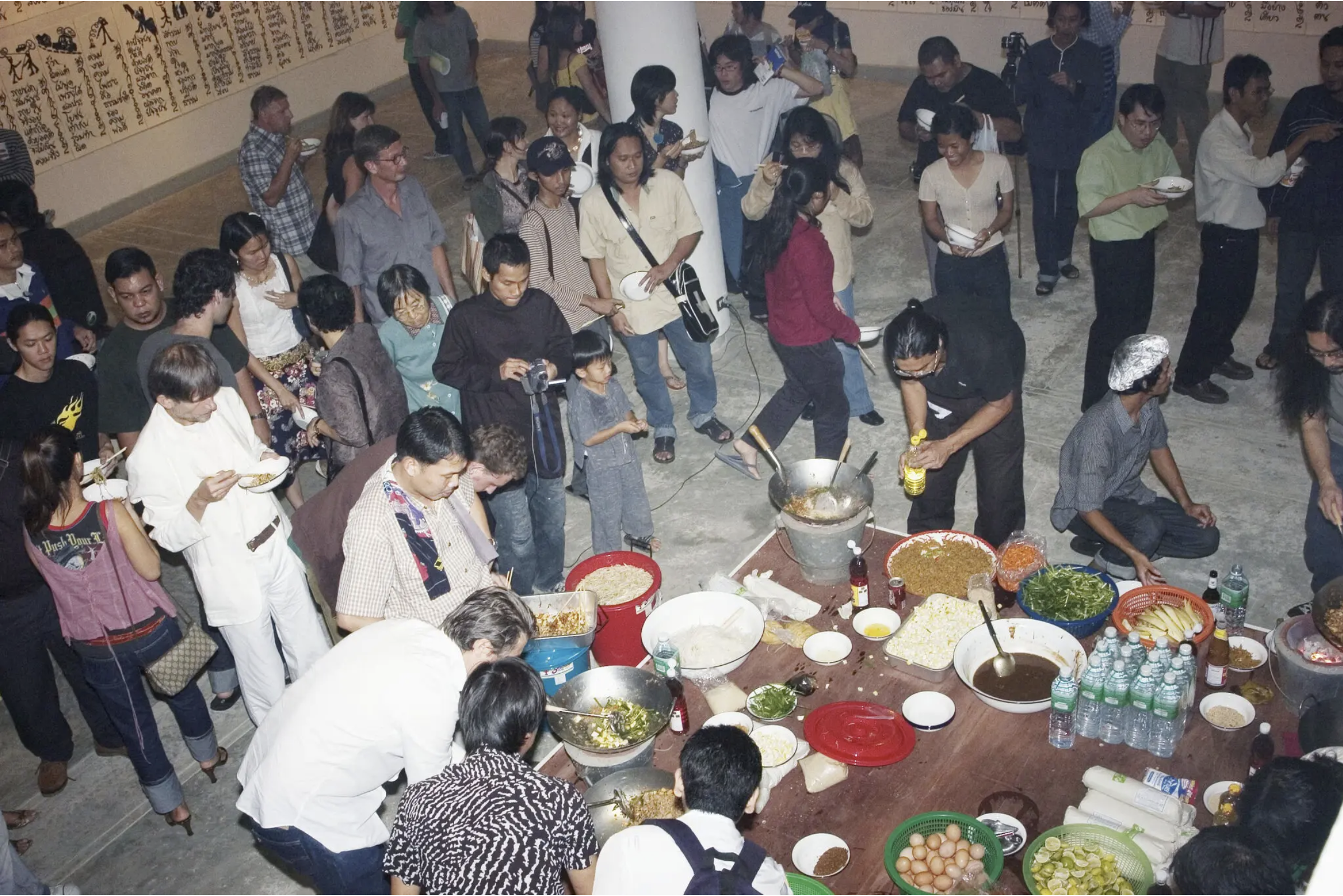
17. Rirkrit Tiravanija, “Untitled 1990 (Pad Thai)”
Through the late 1960s and 1970s, the German artist Joseph Beuys developed the idea of “social sculpture” to describe engaging ordinary people in collective creative processes with the intention of shaping society as a work of art. Some 20 years later, Rirkrit Tiravanija helped push the concept into the century’s final chapter with “Untitled 1990 (Pad Thai),” which he staged at New York’s Paula Allen Gallery. (It’s been restaged several times since then, including at MoMA PS1 in 2023.) The son of a Thai diplomat (and the grandson of a dedicated cook), Tiravanija had always loved food and appreciated how it can foster understanding between people of different backgrounds. On opening night of the performance, he prepared the classic noodle dish in a wok in front of gallerygoers. In an acknowledgment of globalization’s hybridizing currents, he used a westernized recipe that substituted ketchup for tamarind paste. He then served the dish to the viewers, who, in sharing the meal, became a part of the work. “In offering nothing for sale, “Untitled 1990 (Pad Thai)” stood as a rebuke of the commercialism of the 1980s art world. The work also brought domestic warmth into the often-sterile atmosphere of the white cube, prompting diners to contemplate not only ideas of authenticity and exoticism, but the possibility of creating community anywhere. — Rose Courteau